Interior Decor Hacks That Maximize Small Spaces
Henry Caldwell September 22, 2025
As urban living continues to grow and housing sizes shrink, interior decor hacks that maximize small spaces are becoming a must for homeowners and renters alike. In 2025, the focus isn’t just on saving space—it’s about creating stylish, functional, and sustainable environments that feel bigger and more comfortable than they are. From modular furniture to AI-powered smart layouts, new trends are reshaping how we think about living small without sacrificing comfort or personality.
Why Small Space Design Matters Now
Urbanization, rising housing costs, and the remote work boom have all contributed to a demand for clever space-saving solutions. According to the National Association of Home Builders, the average size of new apartments in the U.S. dropped by nearly 10% between 2010 and 2023, and similar patterns are seen worldwide (NAHB, 2023). At the same time, the global home decor market is projected to surpass $800 billion by 2028, driven by consumer demand for functional yet aesthetic designs (Fortune Business Insights, 2024). These numbers show that small space decor isn’t a niche—it’s the new normal.
Living in a small space also impacts well-being. Research shows that cluttered environments can increase stress and reduce productivity. In contrast, spaces designed with intention—where storage and layout are optimized—can promote relaxation and efficiency. That’s why innovative small-space solutions are being embraced not only by city dwellers but also by suburban homeowners looking to make better use of what they already have.
Key Trends in Small Space Interior Decor
1. Modular and Multi-Functional Furniture
One of the most effective interior decor hacks that maximize small spaces is modular furniture. Pieces like fold-out desks, sofa beds, and expandable dining tables allow one room to serve multiple purposes. Brands like IKEA and startups such as Ori Living are leading this shift, offering customizable solutions that adapt to changing needs.
Examples:
- Coffee tables that lift into work desks.
- Beds with built-in storage underneath.
- Modular shelving that doubles as room dividers.
This type of furniture is especially popular among younger renters who move frequently and need flexible options that work in different apartments.
2. Smart Storage Solutions
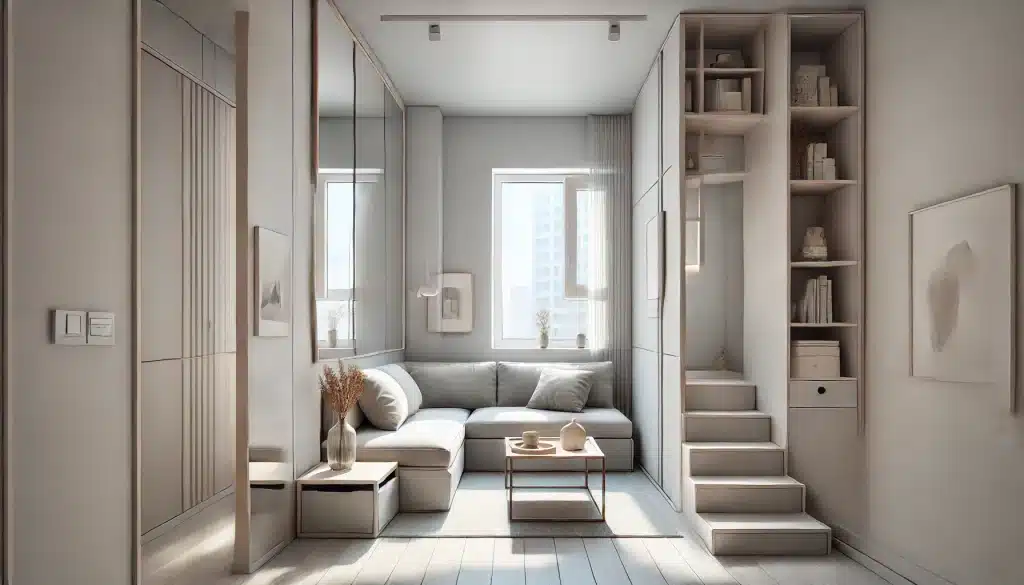
Storage is no longer just about closets and drawers. Floating shelves, under-stair pull-outs, and wall-mounted organizers make use of vertical and “hidden” space. A 2024 Houzz report revealed that nearly 65% of homeowners invested in storage-centric renovations, proving that organization is central to modern living (Houzz, 2024).
Smart storage examples:
- Pull-out pantry shelves in narrow kitchens.
- Over-the-door racks for shoes or accessories.
- Under-bed drawers or rolling bins.
These approaches reduce clutter while making essentials easier to find.
3. Technology-Driven Layouts
Artificial intelligence is entering interior design. Platforms like Modsy and RoomGPT help visualize layouts optimized for both space and style. AI can analyze a room’s dimensions and suggest furniture arrangements that increase flow, natural light, and functionality.
Emerging trend: Augmented reality (AR) apps that let you test furniture in your room virtually before purchase. This not only prevents buying mistakes but also ensures every inch of space is used effectively.
4. Minimalist and Sustainable Design
Minimalism is no longer just a design preference; it’s a space-saving necessity. By focusing on fewer but higher-quality pieces, homes feel less cluttered and more open. Pairing this with sustainable materials—like bamboo, recycled wood, and eco-friendly fabrics—aligns with growing consumer interest in green living. According to Statista, over 70% of global consumers in 2024 preferred eco-friendly home products (Statista, 2024).
Minimalist design also makes cleaning and organizing faster, an important factor for people balancing busy work and family schedules.
5. Light and Color Hacks
Interior designers often recommend lighter wall colors, reflective surfaces, and mirrors to visually expand small rooms. Clever lighting—such as wall sconces instead of bulky floor lamps—creates depth without taking up floor space.
Color trends for 2025:
- Soft neutrals paired with muted pastels.
- Warm whites to reflect natural light.
- Bold accent walls in compact spaces to add character without overwhelming.
Adding mirrors opposite windows can also amplify natural light, making a small room feel airy and welcoming.
6. Flexible Work-From-Home Setups
Remote work remains a big influence on interior design. Instead of large office furniture, homeowners are choosing compact fold-away desks and wall-mounted workstations. These setups allow living rooms or bedrooms to double as professional environments without feeling cramped.
Some furniture brands now offer hybrid “living + work” pieces, like coffee tables that extend into standing desks or bookshelves with built-in charging hubs.
Practical Hacks You Can Use Today
Even without a major renovation, you can apply these interior decor hacks that maximize small spaces right away:
- Use vertical height – Install floor-to-ceiling shelves or hanging planters.
- Opt for sliding doors – Save space compared to swinging doors.
- Add mirrors – Reflect light and make rooms appear larger.
- Choose furniture on legs – Creates the illusion of openness by exposing more floor space.
- Go foldable – From Murphy beds to collapsible chairs, flexibility is key.
- Invest in hidden storage – Ottomans or benches with storage compartments keep clutter out of sight.
- Layer lighting – Use ceiling lights, wall sconces, and under-cabinet strips to brighten dark corners.
- Zone your space – Rugs or shelving units can define areas in open-plan apartments without adding walls.
Common Mistakes to Avoid in Small Space Decor
While it’s easy to focus on trends, avoiding common pitfalls is just as important:
- Overfilling the room: Too much furniture makes even large spaces feel smaller.
- Ignoring scale: Oversized sofas or tables dominate the room. Choose compact, proportionate pieces.
- Poor lighting: Relying only on overhead fixtures can create shadows and make a room feel closed in.
- Neglecting vertical space: Walls, ceilings, and corners often go unused, leaving valuable storage potential wasted.
- Cluttered decor: Too many knickknacks overwhelm the eye. A few carefully chosen pieces work better.
By avoiding these mistakes, small spaces stay balanced, stylish, and functional.
The Future of Small Space Living
Looking ahead, small space design will continue to merge technology with sustainability. Expect to see:
- Smart furniture that integrates charging stations, speakers, and adjustable heights.
- Circular design principles, where furniture is built to be reused, recycled, or repurposed.
- Biophilic elements, bringing natural textures and greenery indoors to make small homes feel connected to the outdoors.
These trends reflect a cultural shift toward intentional living—where every square foot matters.
Conclusion
Maximizing small spaces is no longer just about fitting things in; it’s about designing a lifestyle that balances function, comfort, and sustainability. By adopting modular furniture, smart storage, technology-driven layouts, and eco-friendly design, anyone can transform even the tiniest apartment into a stylish and livable home. In 2025, these interior decor hacks that maximize small spaces are not just trendy—they’re essential.
References
- Fortune Business Insights. (2024). Home Decor Market Size, Share & Growth Report 2024–2028. Available at: https://www.fortunebusinessinsights.com (Accessed: 22 September 2025)
- Houzz. (2024). U.S. Houzz & Home Study: Renovation Trends 2024. Available at: https://www.houzz.com (Accessed: 22 September 2025)
- Statista. (2024). Sustainable Consumer Goods Market – Global Statistics & Facts. Available at: https://www.statista.com (Accessed: 22 September 2025)

 Wellness Practices That Reduce Stress Naturally