Fitness Routines That Improve Strength and Flexibility
Sofia Marquez September 30, 2025
Fitness routines that improve strength and flexibility are among the biggest trends of 2025. People no longer want workouts that only build muscle or only focus on stretching—they want hybrid programs that do both. Whether it’s for athletic performance, longevity, or simply moving without pain, these routines are now shaping gyms, apps, and personal training worldwide.
Why Strength and Flexibility Training Belong Together
Strength and flexibility were once trained in silos: lifting weights in one session, stretching in another. But research now shows they’re more powerful when combined. For example, studies have found that resistance training through a full range of motion can improve flexibility just as effectively as static stretching (Schoenfeld and Grgic 2020). This means you can lift weights and stretch your muscles at the same time.
At the same time, mobility-focused training helps reduce injuries. A 2021 review found that integrating flexibility and strength exercises together can increase joint resilience and improve overall performance in daily life (Behm et al. 2021). For older adults, this approach also helps maintain independence by keeping both muscle strength and mobility intact.
The message is clear: combining strength with flexibility isn’t just efficient—it’s essential.
Hot Trend #1: Mobility-Based Strength Training
The most talked-about trend in 2025 is mobility-based strength training. Instead of traditional bodybuilding moves focused only on power, mobility strength training uses exercises that push muscles to work in extended ranges.
Examples include:
- Cossack squats: Strengthen legs while opening up hip mobility.
- Jefferson curls: Stretch hamstrings while strengthening spinal control.
- Overhead lunges: Build shoulder stability while improving balance and lower-body power.
Athletes use this approach to reduce injury risk, but everyday people are adopting it too—especially those working long hours at desks. Trainers note that when mobility is combined with strength, clients often report less back pain, better posture, and more confidence in movement.
Hot Trend #2: Functional Flow Workouts
Functional flow blends strength training with yoga-like transitions. Instead of doing isolated sets, movements are linked together in a flowing sequence.
A typical sequence might include:
- A push-up flowing into downward dog.
- Transitioning into a kettlebell windmill.
- Rotating into a lunge with a twist.
These workouts build functional strength, balance, and flexibility in one continuous routine. Trainers say flows are especially effective for time-pressed professionals who want both mobility and strength without spending hours at the gym.
They’re also becoming popular in group fitness classes, where flows feel dynamic and energizing—more like movement practice than rigid exercise.
Hot Trend #3: Isometric and Eccentric Training
Another growing trend is isometric holds and eccentric-focused training. Both approaches strengthen muscles while improving flexibility.
- Isometric training involves holding a position under tension—like staying in a deep squat or plank. This not only builds strength but also trains muscles to adapt in stretched positions.
- Eccentric training emphasizes the lowering phase of an exercise. For instance, slowly lowering into a Romanian deadlift deeply stretches hamstrings while strengthening them.
Sports scientists note these methods help prevent tendon injuries and improve resilience in joints. For aging populations, they provide a way to build strength safely without the need for explosive movements.
Case Study: A 20-Minute Routine Anyone Can Try
Here’s a quick yet effective workout that shows how fitness routines that improve strength and flexibility work in practice.
Warm-up (5 minutes)
- Cat-cow stretches for spine mobility
- Arm circles to loosen shoulders
- Walking lunges with a twist for hips and back
Main Circuit (12 minutes) – Repeat Twice
- Cossack squats – 10 reps per side
- Push-up to downward dog – 12 reps
- Romanian deadlift (slow eccentric) – 10 reps
- Overhead lunge walk – 8 steps per leg
- Isometric deep squat hold – 30 seconds
Cool-down (3 minutes)
- Pigeon pose for hips
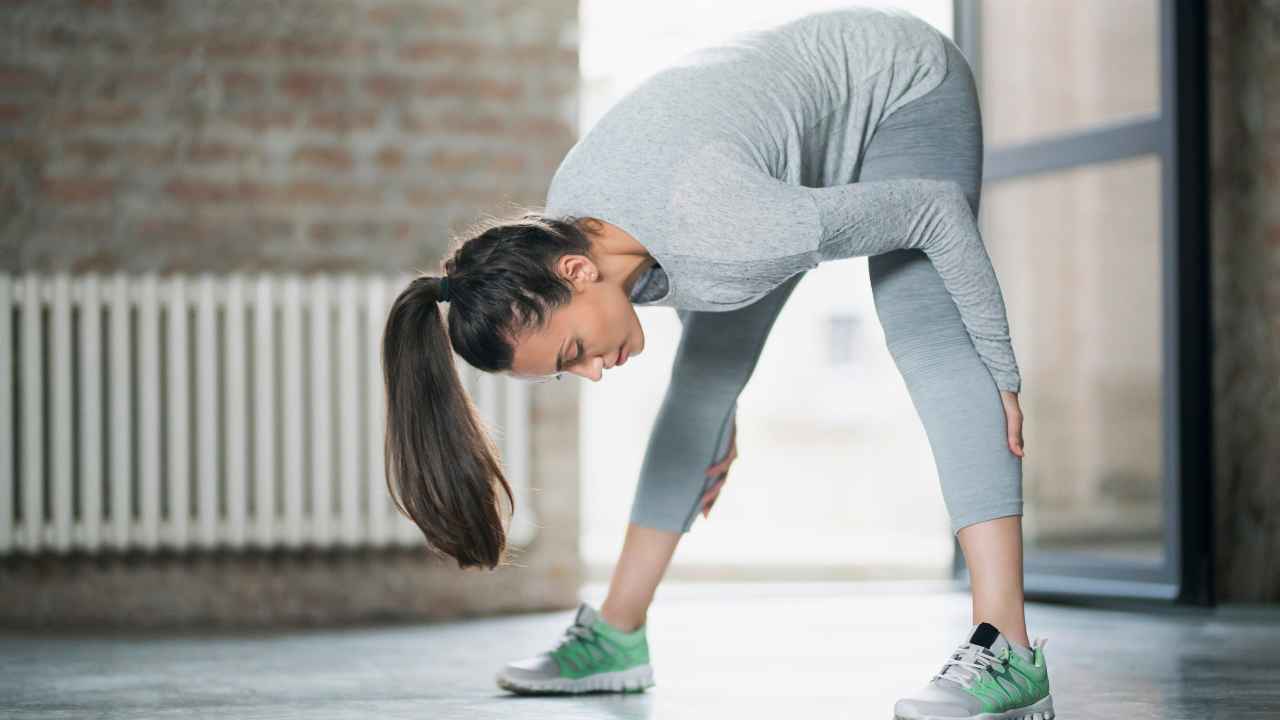
- Forward fold for hamstrings
- Shoulder stretch against wall
This workout takes only 20 minutes but delivers strength, mobility, and flexibility gains at once.
Why This Approach is Exploding in 2025
Several cultural and technological factors are fueling the popularity of hybrid fitness:
- Longevity & healthy aging: With people living longer, the focus has shifted from appearance to mobility and functionality. Being strong but stiff isn’t enough—staying mobile is key.
- Athlete-inspired training: Professional athletes now showcase mobility drills and functional strength routines on social media, influencing everyday fitness culture.
- Wearable technology: Modern fitness trackers measure recovery and joint range of motion, reminding users to train mobility, not just strength.
- Demand for efficiency: Hybrid routines save time. People want workouts that deliver more in less time.
The result? Gyms, trainers, and fitness apps are restructuring programs to emphasize combined strength and mobility.
Expert Insights
Trainers are vocal about the shift. According to the American College of Sports Medicine’s 2023 global fitness survey, functional fitness and mobility-based strength training were ranked among the top worldwide trends (ACSM 2023).
Physical therapists also support the approach, highlighting how mobility-focused strength reduces chronic pain and improves posture. For example, eccentric training is now commonly prescribed for tendon rehabilitation because it strengthens while improving range of motion.
How to Get Started Safely
For those new to hybrid routines, here are some practical tips:
- Start with bodyweight – Before adding weights, master movements like deep squats, lunges, and push-up flows.
- Add load gradually – Use dumbbells or kettlebells to increase strength while maintaining control in flexible positions.
- Focus on form, not speed – Controlled reps maximize both strength and flexibility benefits.
- Listen to your body – Mobility training should challenge but not strain. Sharp pain is a signal to stop.
- Consistency over intensity – Doing 20 minutes daily is more effective than sporadic intense sessions.
The Future of Fitness Routines
Looking ahead, fitness routines that improve strength and flexibility are set to dominate personal training and group classes. Expect to see:
- More AI-powered apps offering hybrid mobility-strength workouts tailored to body type.
- Gyms investing in functional training spaces with kettlebells, bands, and mobility tools.
- Increased crossover between yoga, pilates, and strength training.
The line between flexibility training and strength workouts is disappearing. Instead, fitness is evolving into a holistic practice where power, mobility, and resilience are trained together.
Final Thoughts
Strength without flexibility can lead to stiffness, while flexibility without strength can leave you unstable. The fitness revolution of 2025 is about training both at once. Mobility-based strength workouts, functional flows, and eccentric training are practical, efficient, and proven by science.
No matter your age or background, adopting fitness routines that improve strength and flexibility can help you move better, prevent injuries, and enjoy a stronger, more mobile future.
References
- Grgic, J., Schoenfeld, B.J., Orazem, J. & Sabol, F. (2022). Effects of resistance training performed to repetition failure or non-failure on muscular strength and hypertrophy: A systematic review and meta-analysis. Available at: https://pubmed.ncbi.nlm.nih.gov (Accessed: 30 September 2025)
- “Comparison of resistance training vs static stretching on flexibility and maximal strength in healthy physically active adults” (2024). Available at: https://bmcresorts.biomedcentral.com (Accessed: 30 September 2025)
- ACSM. “Fitness Trends” (2025). Available at: https://acsm.org (Accessed: 30 September 2025)

 Travel Destinations That Inspire Reflection