Travel Destinations That Encourage Adventure and Learning
Henry Caldwell September 29, 2025
In 2025, a powerful trend is reshaping global tourism: learning adventure travel. Travelers are no longer satisfied with traditional sightseeing. They’re craving deeper understanding, personal growth, and active engagement with cultures, landscapes, and knowledge. This article breaks down five of the hottest trends that make adventure travel not just exciting—but educational too.
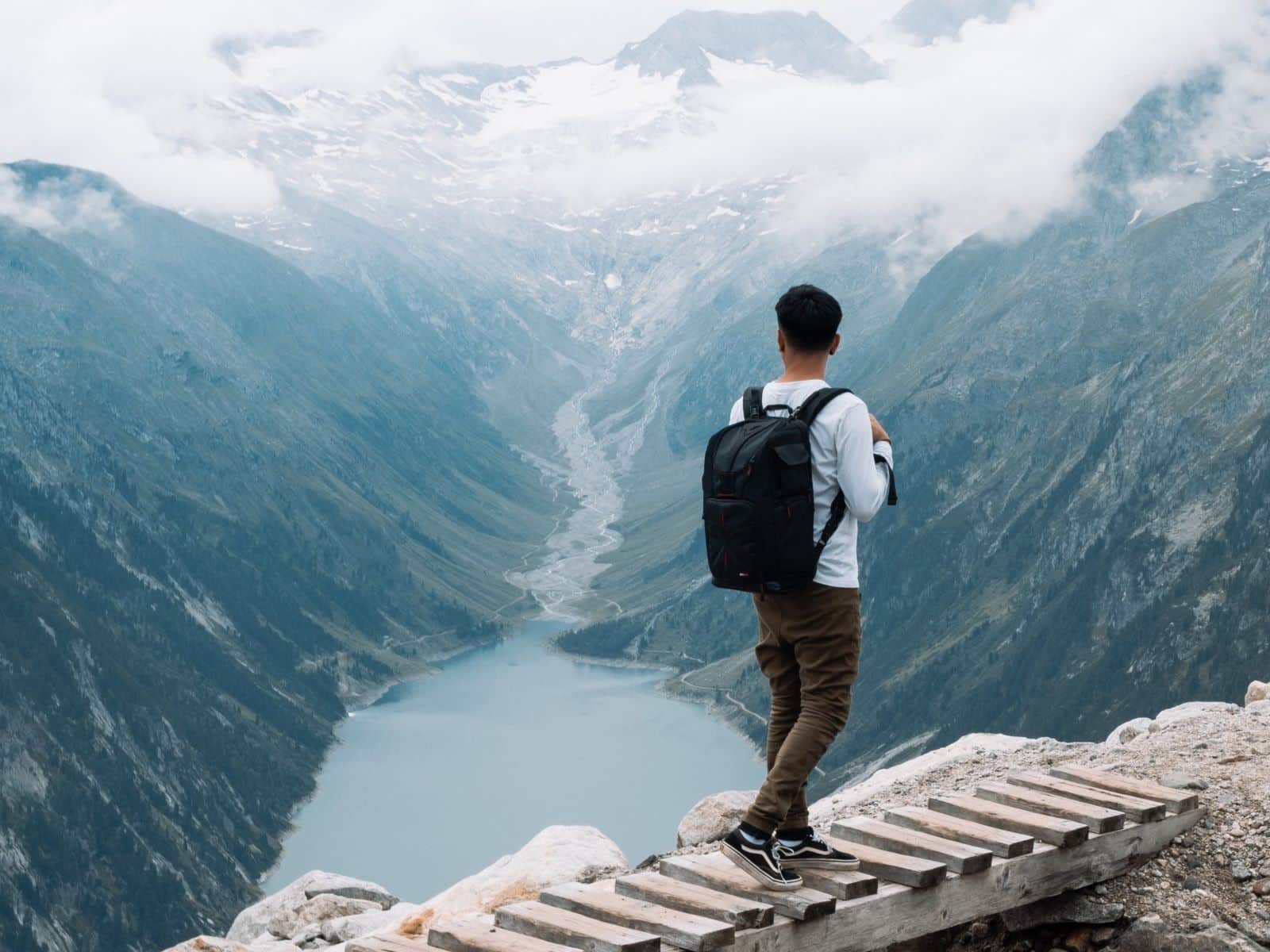
What Is Learning Adventure Travel?
Learning adventure travel is the fusion of exploration with structured or immersive learning experiences. Think treks that teach geology, farm stays that reveal regenerative techniques, or stargazing expeditions that cover constellations and light pollution. Unlike standard vacations, these journeys stimulate the body and the brain.
This trend reflects a growing desire for “meaningful travel.” According to the Zeta Global Travel Trends Report (2025), 53% of American travelers in 2025 are prioritizing experiential learning on vacation (Zeta Global 2025). From Gen Z adventurers to lifelong learners, this travel style cuts across generations and backgrounds.
1. Noctourism – Discovering the World After Dark
Noctourism, or the art of traveling and exploring at night, has exploded in popularity. From desert star baths to moonlit temple tours, nighttime learning offers unmatched sensory and educational experiences.
Destinations like Chile’s Atacama Desert and Namibia’s dark sky reserves are offering guided astronomy treks, astrophotography classes, and science storytelling under the stars. Noctourism isn’t just beautiful—it’s profoundly instructive. Tourists learn about the cosmos, space science, and the importance of preserving dark skies in light-polluted regions.
A recent article in The New York Post identifies noctourism as “one of the most exciting travel movements of 2025,” citing its ability to blend education and emotion under celestial backdrops (New York Post 2024).
2. Regenerative Agritourism – Learn by Working the Land
Agritourism has evolved beyond bed-and-breakfasts and vineyard tastings. Today’s travelers are seeking regenerative farm stays—ecological retreats that allow them to learn sustainability hands-on.
These are not passive farm tours. Guests may help harvest crops, build compost systems, or attend permaculture design workshops. In doing so, they gain insights into soil health, local food systems, and climate resilience.
Vogue’s 2025 travel edition ranks regenerative agritourism among the top five “transformational travel experiences,” particularly popular among eco-conscious millennials and Gen Z (Vogue 2025).
These experiences reinforce not just sustainability, but self-reliance and scientific understanding of how ecosystems function. And because they often take place in rural areas, they support local economies and cultural preservation too.
3. Narrative-Driven Itineraries – Travel That Tells a Story
In the past, travel itineraries were built around geographic convenience. Now, a fresh idea is gaining momentum: narrative-driven travel.
This method structures the traveler’s journey like a story—with a protagonist (you), a theme (resistance, love, migration, etc.), and chapters represented by each destination. Museums, natural sites, and historic buildings are no longer standalone attractions—they’re woven into a narrative arc.
Recent research out of MIT’s Interactive Travel Lab has explored algorithms that craft travel “scripts” using emotional pacing and thematic alignment to maximize engagement and retention (Tan et al. 2025).
This approach is especially powerful for learning travel. It keeps the mind engaged and helps travelers retain more information, as sites aren’t just visited—they’re contextualized.
4. Hybrid Learning: Tech-Enhanced Exploration
As educational travel gains traction, so does the integration of hybrid learning formats. Travelers are now mixing on-the-ground exploration with virtual learning modules, pre-departure readings, or augmented reality (AR).
Examples include:
- AR apps that reconstruct ancient cities as travelers explore ruins.
- Pre-trip webinars with local historians or biologists.
- Post-trip reflection journals shared via group forums or email communities.
According to a recent report from Road Scholar, a leading educational travel provider, 2025 marks a major transition toward hybrid and lifelong learning models for mature travelers (Road Scholar 2025).
This blend of physical and digital learning ensures higher engagement and retention—especially useful when navigating rich cultural or scientific subjects.
5. Off-the-Radar Destinations – Learning in the Quiet
Overtourism has driven savvy travelers toward underexplored, off-peak destinations. Places like Kyrgyzstan, Bhutan, and Bolivia are now being recognized not just for beauty—but for their depth of local knowledge.
These regions often preserve pre-colonial history, indigenous ecological knowledge, or lesser-known political narratives that traditional hotspots can’t offer. Visiting these places isn’t just peaceful—it’s enlightening.
Rustic Pathways, a youth-focused travel company, cites “under-touristed cultural frontiers” as a top trend for 2025, noting that the combination of affordability and cultural richness is drawing crowds who want more than Instagram shots (Rustic Pathways 2025).
By choosing a less-trodden path, travelers access stories and systems still untouched by mass tourism—and that authenticity fosters genuine learning.
Example: 10-Day Learning Adventure in Georgia (Caucasus)
To bring this to life, here’s a fictional—but realistic—itinerary blending all five trends:
| Day | Activity | Learning Focus |
|---|---|---|
| 1 | Arrival, local village welcome | Georgian hospitality & oral storytelling |
| 2 | Night hike to cave monastery | Noctourism & medieval religious history |
| 3 | Wine-making workshop on regenerative farm | Viticulture & ecological cycles |
| 4 | AR-assisted ruins tour | Hybrid tech + archaeology |
| 5 | Day of silence + reflection | Mental wellness, journaling |
| 6 | Cooking class in refugee-run kitchen | Migration narratives, food anthropology |
| 7 | Folk music narrative night | Music as oral history |
| 8 | Mountain trek with glacial geologist | Climate change education |
| 9 | Group synthesis workshop | Structured reflection & learning integration |
| 10 | Departure | Cultural gratitude ritual |
This trip unifies adventure and learning across cultural, environmental, and psychological dimensions.
Planning Your Own Learning Adventure Travel
Interested in creating your own educational odyssey? Here are actionable tips:
- Start with curiosity: Choose one central question or theme you want to explore—climate, migration, astronomy, etc.
- Work with local educators: Whether it’s a community historian or a biologist, build in expert-led sessions.
- Balance movement and meaning: Adventure doesn’t mean rush. Leave space for journaling, rest, and integration.
- Avoid overtourism traps: Instead of Paris, try Lyon. Instead of Machu Picchu, visit Choquequirao.
- Bring analog tools: A field notebook, map, and binoculars may teach you more than any phone.
Final Thoughts
Learning adventure travel in 2025 is not just a niche interest—it’s the evolution of global tourism. Travelers crave stories, context, challenge, and growth. Whether it’s through nocturnal exploration, regenerative farming, digital hybrids, narrative-rich design, or hidden gems, today’s journeys teach as much as they thrill.
As we reshape how we move through the world, learning becomes the most exciting souvenir of all.
References
- Zeta Global. Top 2025 Travel Trends & Tips for Marketers. Available at: https://zetaglobal.com (Accessed: 29 September 2025)
- Ding, R., Zhang, Z., Zhu, Y., Kong, Z., & Xu, P. (2025). Narrative‑Driven Travel Planning: Geoculturally‑Grounded Script Generation with Evolutionary Itinerary Optimization. Available at: https://arxiv.org (Accessed: 29 September 2025)
- Stewart, J. “What is noctourism—and why is it on the rise?”. Available at: https://www.nationalgeographic.com (Accessed: 29 September 2025)

 Emerging Trends in Global Business and Entrepreneurship