Interior Design Ideas That Maximize Natural Light
Henry Caldwell September 19, 2025
Natural light plays a pivotal role in interior design, enhancing the aesthetics, mood, and energy efficiency of a space. As people seek to create brighter, more inviting homes, the demand for design elements that prioritize natural light has risen dramatically. Incorporating natural light not only makes a space feel more expansive but also brings about various health benefits. As we continue to embrace sustainability and energy-efficient solutions, interior designers and homeowners are experimenting with innovative ways to maximize natural light.
In this article, we will explore the latest interior design ideas and trends for harnessing natural light effectively. Whether you are renovating an existing space or designing from scratch, these tips will help you create a home that feels airy, welcoming, and filled with natural light.
Why Maximize Natural Light?
Before diving into the tips, it’s important to understand why maximizing natural light is so beneficial:
- Health and Well-being: Exposure to natural light boosts mood, helps regulate circadian rhythms, and increases Vitamin D levels, which are essential for bone health. Studies have even shown that natural light in the home can improve mental health and reduce stress levels.
- Energy Efficiency: Using natural light during the day helps reduce reliance on artificial lighting, which can lead to lower electricity bills and a smaller carbon footprint.
- Aesthetic Appeal: Rooms bathed in natural light look larger and more open, which is particularly beneficial for small spaces. Natural light also brings out the true colors of your furnishings and decor, giving the room a more vibrant feel.
1. Light, Reflective Colors
One of the simplest and most effective ways to make the most of natural light is by using light, reflective colors. When surfaces reflect light, it can make a room feel more open and airy. Consider using these strategies:
- Light Walls: White, soft grays, and pastels reflect natural light, giving the room a brighter and more expansive feel. Consider painting your walls with these shades for a timeless, light-enhancing effect.
- Reflective Furniture and Decor: Glossy finishes, mirrors, and metallic accents can bounce natural light around the room. Choosing light-colored furniture pieces or decor will also help in spreading light across the space.
2. Window Treatments
Effective window treatments are essential for controlling how much natural light enters a room. Here are some options to consider:
- Sheer Curtains: Sheer or lightweight curtains allow natural light to filter into the room while still providing some privacy. These treatments diffuse the light and soften the overall look of a space.
- Adjustable Blinds or Shades: For better control over light and privacy, consider using blinds or shades that can be adjusted throughout the day.
- No Window Coverings: In spaces where privacy is less of a concern, such as living rooms or kitchens with beautiful views, eliminating window coverings altogether can maximize sunlight exposure.
3. Open Floor Plans
An open floor plan encourages the flow of natural light throughout the space. If you are planning a renovation or building a new home, consider removing walls that block light. Some of the benefits include:
- Expansive Feel: When the walls separating rooms are removed, light can flow freely from one space to another, brightening the entire home. Open kitchens, living rooms, and dining areas also help create a more unified space.
- Light Distribution: With fewer barriers, light can travel deeper into the home, ensuring that even the furthest corners of the space are illuminated.
4. Large Windows and Skylights
Windows are the primary source of natural light in most homes, so maximizing their size and placement can significantly increase the amount of light in a room.
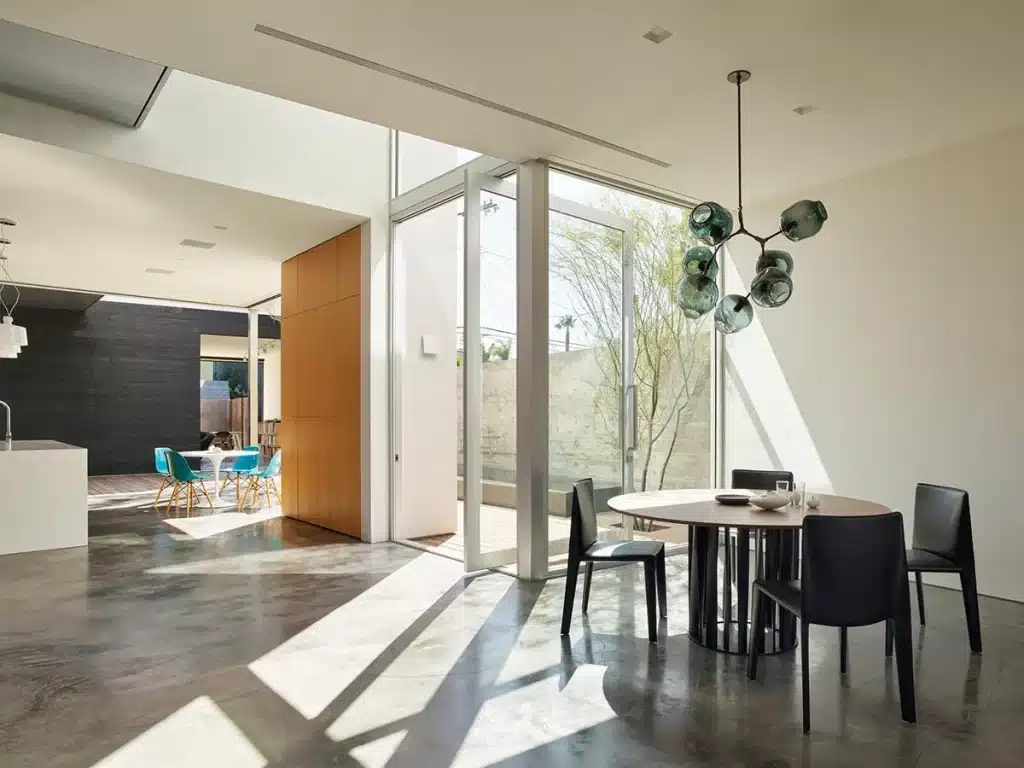
- Floor-to-Ceiling Windows: If your budget and design allow, consider installing large, floor-to-ceiling windows. These windows not only allow more light into the room but also offer scenic views that enhance the space.
- Skylights: Skylights are perfect for rooms without exterior walls, such as bathrooms or hallways. They provide an excellent source of natural light without sacrificing privacy.
- Glass Doors: Replace solid doors with glass doors to allow light to pass from one room to another. Sliding glass doors, in particular, are a stylish way to open up the space and allow for more sunlight.
5. Glass Partitions
While walls separate spaces and provide privacy, glass partitions can offer the same functionality while maintaining the flow of light. These are ideal for:
- Separation of Spaces: Glass walls or partitions can divide spaces without obstructing light. Consider using them in areas where you want to maintain openness, such as between the kitchen and dining area or between the living and dining rooms.
- Modern Aesthetic: Glass adds a sleek, modern touch to your design and helps open up the space, ensuring light circulates freely.
6. Low-Profile Furniture
The furniture you choose and its placement can either block or enhance the flow of natural light in a room. Here are some tips for arranging your furniture to maximize light:
- Avoid Blocking Windows: Keep large pieces of furniture, like bookshelves or sofas, away from windows to ensure that light can reach all corners of the room.
- Opt for Low-Profile Furniture: Low-profile furniture pieces, such as low-sitting chairs and couches, allow light to pass over and beneath them, making the room feel more open.
- Reflective Furniture: Consider furniture with reflective surfaces like glass tables or metal finishes. These pieces bounce light and help brighten the space.
7. Incorporate Indoor Plants
Plants are a great way to enhance the aesthetic value of a room while promoting a connection to nature. However, certain plants also thrive in indirect light, making them perfect for spaces where you want to preserve the flow of sunlight. Here are some examples:
- Ferns: Known for their resilience in low light, ferns are an excellent choice for darker spaces.
- Snake Plants: These hardy plants can thrive in both low and high-light conditions, making them ideal for rooms with fluctuating sunlight.
- Spider Plants: These low-maintenance plants can thrive in various light conditions, making them a versatile addition to any home.
8. Use Natural Materials
Natural materials such as wood, stone, and metal can amplify the effects of natural light while adding warmth and texture to your home’s design.
- Wood Floors: Light-colored wood floors are not only visually appealing but also help reflect light, brightening up the space.
- Stone and Marble: These materials are often used in countertops and floors and have reflective properties that can enhance natural light in a room.
- Metal Accents: Incorporating metal finishes in your lighting fixtures or furniture can reflect light and add a sophisticated touch.
9. Consider the Seasonality of Light
The intensity and angle of natural light change with the seasons, which can impact how much light enters your home. In the winter months, the sun is lower in the sky, which may allow more light to enter certain rooms. In contrast, during summer, light may be more intense and direct. Adjusting window treatments and furniture placement according to the season can help you maintain optimal light levels throughout the year.
Conclusion
Maximizing natural light is an effective and sustainable way to enhance your home’s design and energy efficiency. By incorporating light colors, large windows, open floor plans, and reflective materials, you can create a brighter and more welcoming environment. Whether you are building, renovating, or simply updating a space, these interior design ideas will help you harness the power of natural light to make your home feel more open, vibrant, and connected to the outdoors.
References
- Winsor, L., Corner, E., Eppinger, K., & Schubert, M. (2025, April 16). 9 ways to maximize natural light in your home. Martha Stewart. Available at: https://www.marthastewart.com (Accessed: 19 September 2025)
- Weier, A. (2025, February 14). 8 ways to increase natural light in your home. Better Homes & Gardens. Available at: https://www.bhg.com (Accessed: 19 September 2025)
- Renae Keller Design. (2025, January 13). Maximizing your home’s natural light in interior design. Available at: https://www.renaekeller.com (Accessed: 19 September 2025)

 Travel Experiences That Inspire Creativity